
Enhancing the Reliability of Power Distribution Units (PDUs)

Power Distribution Units (PDUs) serve as the backbone of electrical power delivery in critical environments, distributing electricity to servers, switches, routers, and other networked devices. As technology advances, ensuring that PDUs operate reliably under various conditions has become a primary goal for designers and manufacturers. Two key aspects that significantly contribute to the improvement of PDU reliability are the relay switching mechanism and the application of Zero Cross Detection (ZCD). These innovations not only enhance operational stability but also extend the longevity of components and reduce the risk of failure.
Relay Switching: The Cornerstone of PDU Power Control
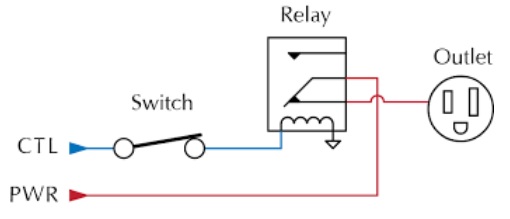
Relays are electromechanical switches that control the flow of electricity to various connected devices within a PDU. They serve as a vital component for managing the on/off control of power outlets, remote reboot functions, and load management. Traditional mechanical relays, when engaged, generate arc discharge due to high inrush current, especially during switching at peak voltage or current levels. This arcing can degrade the relay contacts over time, leading to unreliable performance, shortened device lifespan, or even failure under load.
To address this, modern PDUs implement advanced switching methods that optimize the timing and sequencing of relay activation. For example, staggered switching—where each relay activates in a slightly delayed sequence—helps minimize the inrush current load on the system. This technique prevents simultaneous surge currents from overloading internal circuits or external breakers, thus enhancing the operational safety of the device.
However, regardless of staggered timing, the exact moment the relay switches within the AC waveform can significantly impact the stress placed on the relay contacts. This is where Zero Cross Detection comes into play, acting as a key innovation to further improve PDU reliability.
Zero Cross Detection: A Smart Solution for Safer Switching
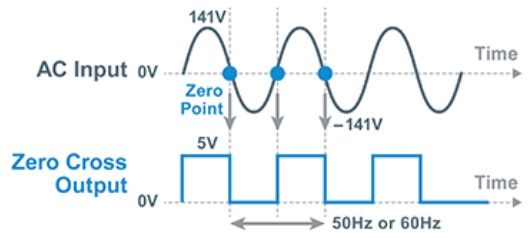
Zero Cross Detection (ZCD) is a technique that monitors the AC waveform and identifies the moment when the voltage crosses zero—meaning it is transitioning from positive to negative (or vice versa). This point in the waveform represents the lowest electrical potential, and therefore the safest and most optimal moment for a relay to switch.
Integrating ZCD into the relay switching process offers several benefits:
-
Reduced Electrical Stress and Arc Formation
When a relay closes or opens at or near the peak of the AC waveform, the voltage difference across the contacts is at its highest. This results in a larger arc, which erodes contact surfaces and generates heat. By switching at the zero-cross point, the voltage differential is minimal, significantly reducing arcing and contact wear.
-
Enhanced Component Lifespan
Lower electrical stress translates into longer-lasting relays. The relay’s mechanical and electrical durability improves as the wear-and-tear from arcing is minimized. This reduces the frequency of maintenance and component replacement, which is particularly critical in data centers and industrial environments where uptime is essential.
-
Improved System Stability
Coordinating relay switching with the AC zero-cross point also helps stabilize the load behavior of the entire PDU system. It prevents sudden power surges, mitigates electromagnetic interference (EMI), and ensures cleaner transitions when devices are powered on or off.
-
Energy Efficiency and Heat Reduction
The minimized arcing and smoother transitions reduce energy loss and internal heat generation. This contributes to a more efficient power system and decreases the need for cooling measures within enclosures, which is especially beneficial in high-density server racks.
Implementation and Industry Impact
The application of ZCD in PDUs requires the integration of signal processing circuits that detect the zero-cross point of the AC input. These circuits synchronize the relay switching commands accordingly. While the added complexity may increase initial development costs, the long-term benefits in terms of reliability, safety, and reduced maintenance significantly outweigh the upfront investment.
Leading manufacturers in the industrial networking and power management sector have started incorporating this technology into their PDU designs. The demand for intelligent PDUs with remote monitoring, energy metering, and enhanced safety mechanisms is growing, driven by the need for smart infrastructure in data centers, manufacturing plants, and telecom environments.
Advancing PDU Reliability through Innovation
By leveraging these technologies, Emplus ensures that its power distribution systems meet the rigorous demands of modern industrial applications. The solutions are designed with durability, safety, and energy efficiency in mind—enabling customers to achieve higher uptime, lower total cost of ownership, and better system performance.
Enhancing PDU reliability is no longer solely about using high-quality components; it’s about intelligent design. Relay switching strategies and the integration of Zero Cross Detection play a crucial role in reducing stress on electrical contacts, improving operational safety, and extending the lifespan of the devices. Emplus’s commitment to incorporating these innovations reflects their dedication to delivering reliable, future-ready solutions for industrial and networked environments.