
Unlocking Precise Indoor Positioning: Leveraging UWB in Wi-Fi 7 Devices

In recent years, the demand for accurate indoor positioning has risen significantly across industries, from smart factories and warehouses to retail and healthcare. While GPS has revolutionized outdoor navigation, its performance indoors is limited due to signal attenuation and multipath interference. To address this gap, Ultra-Wideband (UWB) technology has emerged as a powerful solution, providing centimeter-level accuracy and low-latency positioning capabilities. With the advent of Wi-Fi 7, integrating UWB into wireless devices presents new opportunities for delivering seamless connectivity and precise location services in indoor environments.
The Need for Indoor Precision
Indoor environments present unique challenges for positioning. Walls, floors, and equipment interfere with wireless signals, leading to reduced accuracy in traditional systems such as Wi-Fi-based RSSI (Received Signal Strength Indicator) or Bluetooth beacons. For applications such as automated guided vehicles (AGVs) in factories, patient monitoring in hospitals, or asset tracking in logistics centers, small errors in positioning can lead to inefficiencies, safety concerns, or operational disruptions.
This is where UWB stands out. Unlike narrowband technologies, UWB transmits short pulses across a wide frequency spectrum, allowing it to measure time-of-flight (ToF) with exceptional precision. This enables positioning accuracy within 10–30 centimeters, even in cluttered environments. Combined with Wi-Fi 7’s improved throughput, latency, and spectrum efficiency, devices that integrate both communication and positioning capabilities can redefine what is possible in indoor wireless solutions.
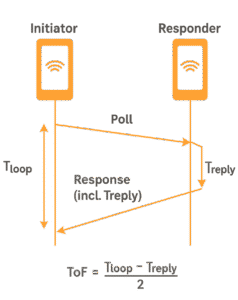
UWB Meets Wi-Fi 7
Wi-Fi 7 (IEEE 802.11be) introduces enhancements such as multi-link operation (MLO), wider channel bandwidths up to 320 MHz, and support for higher modulation schemes like 4096-QAM. These improvements ensure faster and more stable wireless connectivity. By embedding UWB alongside Wi-Fi 7 in the same product, manufacturers can enable devices to serve dual purposes: reliable high-speed communication and ultra-precise location tracking.
For example, a Wi-Fi 7 access point equipped with UWB anchors could provide both network coverage and real-time location services for mobile devices within its coverage area. This integration reduces the need for separate infrastructure, simplifying deployment and lowering costs. Moreover, Wi-Fi 7’s capacity to handle dense device environments complements UWB’s role in delivering accurate location information without congestion.
Applications Across Industries
The combination of UWB and Wi-Fi 7 unlocks numerous possibilities in indoor environments:
-
Smart Manufacturing
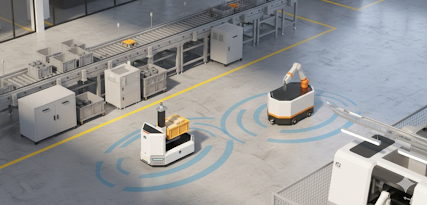
AGVs, robotic arms, and sensors require precise navigation to optimize workflows and avoid collisions. Wi-Fi 7 with UWB integration ensures both real-time communication with the control system and centimeter-level location tracking.
-
Healthcare
Patient monitoring devices can use Wi-Fi 7 for data transmission while leveraging UWB to locate patients or medical equipment within hospital facilities. This improves safety, resource allocation, and emergency response times.
-
Retail and Smart Buildings
UWB-enhanced Wi-Fi 7 can enable location-based services such as indoor navigation, targeted promotions, and asset tracking, enhancing customer experiences and operational efficiency.
-
Logistics and Warehousing
Tracking the precise movement of goods, forklifts, and workers within large warehouses ensures smoother inventory management and improved safety. Wi-Fi 7 ensures high data throughput for systems such as automated scanning, while UWB ensures positional accuracy.
Technical and Design Considerations
To realize these benefits, careful product design and system integration are essential. Embedding UWB into Wi-Fi 7 devices requires considerations such as:
-
Antenna Design
UWB operates in a different frequency range compared to Wi-Fi, requiring optimized antennas that minimize interference while maintaining performance.
-
Power Consumption
Balancing UWB’s high precision with energy efficiency is critical, especially in battery-powered devices.
-
Standardization and Interoperability
Ensuring compliance with IEEE and FiRa Consortium standards allows for seamless operation across different vendors’ equipment.
-
Security and Privacy
Precise location data is sensitive, so robust encryption and access control are necessary to protect against misuse.
The Road Ahead
As indoor positioning becomes a cornerstone of smart environments, combining UWB with Wi-Fi 7 will play a pivotal role in shaping the future of connectivity. From industrial automation to personalized customer experiences, the synergy of high-speed communication and precise localization will unlock new applications that were previously impractical or unattainable.
Emplus, as a provider of networking solutions, is actively exploring how UWB-enabled Wi-Fi 7 products can meet the evolving demands of modern industries. By leveraging its expertise in industrial-grade wireless and networking technologies, Emplus is committed to delivering solutions that not only provide robust connectivity but also enable precise indoor positioning, empowering businesses to achieve greater efficiency, safety, and innovation.