As technology continues to advance, our reliance on wireless connectivity has grown exponentially. With the proliferation of smart devices and the increasing demand for high-speed internet access, the power consumption of Wi-Fi systems has emerged as a pressing concern. In this article, we will explore how the combination of Wi-Fi 7 DPD (Digital Pre-Distortion) technology and non-linear power amplifiers (PAs) addresses these challenges by effectively reducing power consumption and mitigating heat-related issues.
Traditionally, linear power amplifiers have been widely used in wireless communication systems due to their ability to deliver high power output with relative ease. However, they come with a significant drawback: high power consumption. Linear power amplifiers operate by maintaining a linear relationship between the input and output signals. While this design facilitates high power output, it simultaneously results in substantial power dissipation and inefficiency.
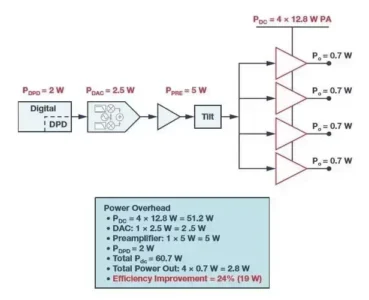
To overcome these limitations, non-linear power amplifiers have emerged as an alternative solution. Non-linear power amplifiers allow signal amplification without being bound by the strict constraints of linearity, thereby offering significantly higher power efficiency. By leveraging the specific characteristics of non-linear components—such as Field-Effect Transistors (FETs) or Gallium Nitride (GaN) amplifiers—these power amplifiers can achieve superior energy efficiency while still maintaining signal integrity. The integration of Wi-Fi 7 DPD technology further enhances the performance of non-linear power amplifiers. DPD (Digital Pre-Distortion) is a signal processing technique used to compensate for the non-linear distortion introduced by the power amplifier. It pre-distorts the input signal in a manner that counteracts the non-linear characteristics of the power amplifier, resulting in a much cleaner output signal. In other words, DPD technology corrects the imperfections caused by non-linearity, enabling the power amplifier to operate more efficiently and deliver higher-quality signals.
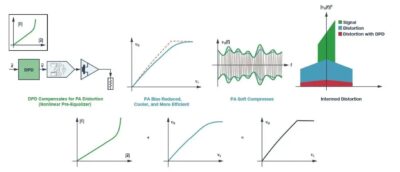
In Wi-Fi 7 systems, one of the most significant advantages of combining non-linear power amplifiers with DPD technology is the reduction of power consumption. As power demands grow, finding ways to minimize energy consumption without sacrificing performance has become crucial. Due to their inherent characteristics, non-linear power amplifiers consume less power compared to linear power amplifiers. Their efficient utilization of power resources helps alleviate the growing concerns over power consumption in Wi-Fi 7 systems. Furthermore, the integration of DPD technology further optimizes power efficiency. By compensating for non-linear distortion, DPD enables the power amplifier to operate at lower power levels while achieving the same high power output. This reduction in power demand translates into significant energy savings and reduces the overall power consumption of the Wi-Fi 7 system. Consequently, system operations become more efficient, the carbon footprint is reduced, and costs associated with power consumption are saved.
Additionally, the implementation of combining non-linear power amplifiers with DPD technology in Wi-Fi 7 systems also addresses heat dissipation issues. Power amplifiers, particularly linear power amplifiers, generate considerable heat during operation. Excessive heat not only damages the lifespan and reliability of the equipment but also requires additional heat dissipation mechanisms, thereby increasing the complexity and cost of the overall system. Due to their enhanced energy efficiency, non-linear power amplifiers inherently generate less heat than linear power amplifiers. This means that integrating non-linear power amplifiers into Wi-Fi 7 systems reduces the heat generated by the amplification process. Moreover, DPD technology optimizes power usage, thereby lowering power dissipation and reducing heat generation. Therefore, Wi-Fi 7 systems combining non-linear power amplifiers and DPD technology experience less thermal stress, which improves performance, extends equipment lifespan, and reduces the demand for heat dissipation.
In the continuously evolving wave of technology, the engineering team at Emplus remains dedicated to continuous learning and understanding of emerging technologies. In every new design, we consider the latest advancements in the field and meticulously select the most appropriate solutions. By staying at the forefront of innovation and leveraging the advantages of non-linear power amplifiers paired with DPD technology, Emplus is committed to delivering Wi-Fi 7 systems that excel in power efficiency, heat dissipation, and overall performance. Our unwavering commitment to implementing the best solutions ensures that we meet the evolving needs of our customers and pave the way for a more efficient and interconnected future.